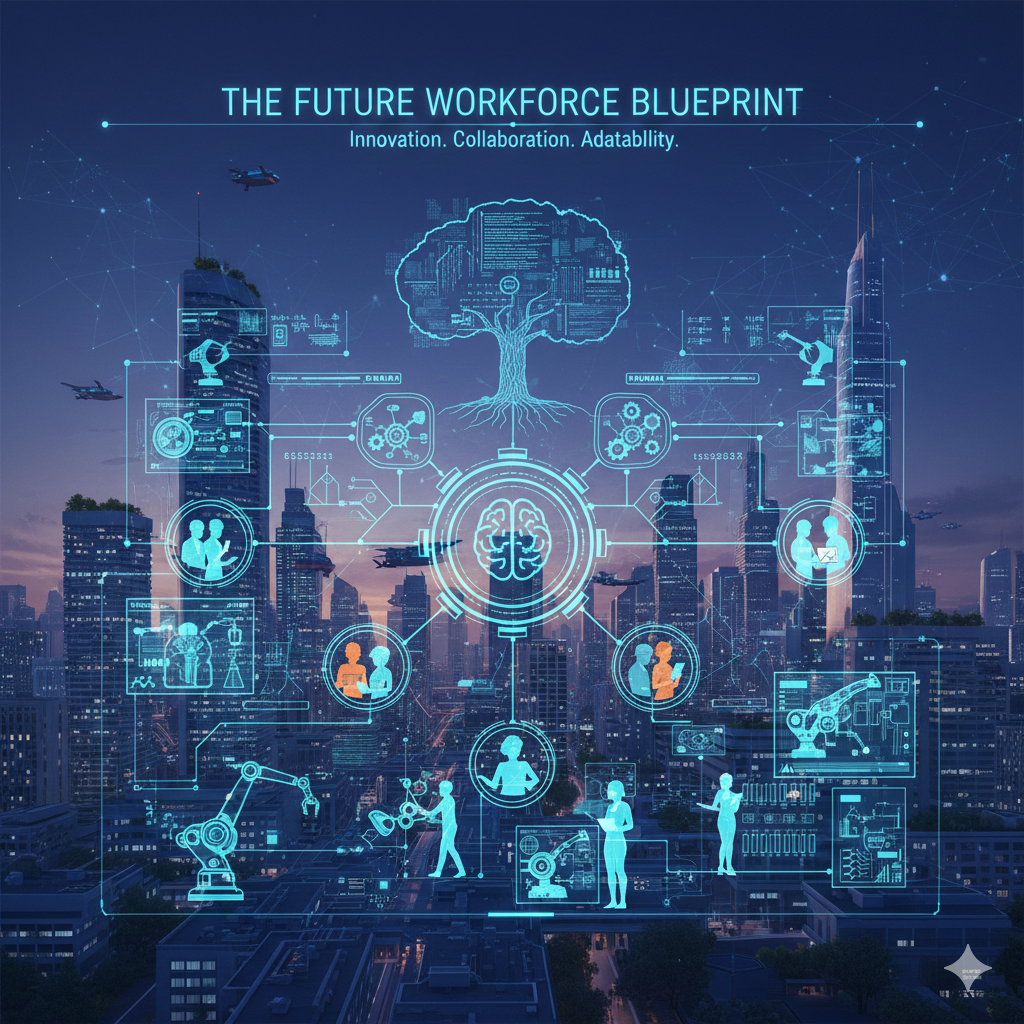
Microsoft's AI Gamble Reveals The Future Workforce Blueprint
Microsoft just fired thousands of workers. Then they announced an $80 billion investment in AI.
This apparent contradiction reveals something profound about the future of work. It's not simply about cutting costs. It's about strategic workforce reshaping in an AI-powered world.
The tech giant is spending $80 billion this fiscal year on AI infrastructure while simultaneously reducing their global workforce by nearly 3%. This isn't random corporate chaos. It's calculated transformation.
Most see layoffs as cost-cutting desperation. But what if they're actually strategic realignment for an AI-powered future?
Strategic Pruning, Not Panic Cutting
Microsoft's CFO Amy Hood recently emphasized "building high-performing teams and increasing our agility by reducing layers with fewer managers." This reveals the true nature of these cuts.
They're targeting management layers specifically. Not performance issues.
The goal is streamlining organizational structure while simultaneously pouring unprecedented resources into AI capabilities. This pattern matches what I've observed across industries adopting what I call the Hybrid AI Workforce approach.
Companies aren't just slashing jobs randomly; they're beefing up their AI teams while reducing roles that AI can augment or replace. The result is a workforce that's leaner in some areas but exponentially more powerful in others.
The Hybrid AI Workforce Emerges
This is where the true opportunity lies. The most successful organizations won't simply replace humans with algorithms. They'll strategically combine human intelligence with AI capabilities.
Microsoft's approach mirrors what forward-thinking companies across all industries should consider. Human judgment and AI processing power working in harmony.
The data tells us this isn't isolated to tech giants. These workforce transformations are part of a broader pattern spreading across industries as AI capabilities mature.
What makes this different from previous technological disruptions is the scale and speed of change. AI isn't just automating repetitive tasks. It's transforming knowledge work itself.
Small Businesses Face The Biggest Opportunity
While Microsoft dominates headlines, this transformation presents perhaps the greatest opportunity for small and mid-sized businesses.
Large enterprises have legacy systems and organizational inertia. Smaller organizations can implement AI-powered recruitment and workforce strategies with greater agility.
The key is approaching AI strategically rather than reactively. This means:
Analyzing your workforce for AI augmentation opportunities - identifying where human-AI collaboration creates the most value.
Implementing data-driven recruitment processes - using AI to identify candidates who will thrive in a hybrid work environment.
Developing clear AI integration roadmaps - planning systematic adoption rather than piecemeal implementation.
The Human Element Remains Critical
The most successful AI implementations recognize that technology augments human capabilities rather than replacing them entirely. This is the core principle behind the Hybrid AI Workforce model.
Microsoft's strategy suggests they understand this balance. They're not abandoning human talent. They're reshaping how that talent is organized and deployed alongside powerful AI systems.
The companies that will thrive aren't those that simply cut jobs and add algorithms. They're the ones that strategically reshape their workforce around what humans do best while leveraging AI for everything else.
This is the blueprint for the future of work that Microsoft's moves reveal. Not wholesale replacement, but strategic transformation.
The question isn't whether AI will change your workforce. It's whether you'll shape that change strategically or react to it chaotically.
The future belongs to those who choose the former.